Why the "Wrong" Career Move Was the Smartest Thing Bo Meissner Ever Did
Podcast Recap: Why the "Wrong" Career Move Was the Smartest Thing Bo Meissner Ever Did
Most people who end up as CFO of a public company followed a fairly linear path. Finance degree. Big firm. Climb the ladder. Bo Meissner, CFO of Grassroots Carbon and former CFO of Vital Farms, did not do any of that. He started as a geologist, ran a roofing crew at 22, backpacked across multiple continents, and walked into his MBA with as many marketing credits as finance credits — by design.
In Episode 2 of The CFO Review, I sat down with Bo to trace the winding, deliberate path that built one of the most complete finance leaders I've come across. And the thing that struck me most is that almost every "unconventional" move he made — the lateral job, the career break, the mission-driven detour — turned out to be exactly the right one.
Here's what finance leaders should take from his story.
The Roofing Company That Taught Him More Than Any Classroom
Before Procter & Gamble, before the MBA, before any of it, Bo was 22 years old in Ottawa, working for a district manager who was taking 40% of his earnings and contributing nothing. Two weeks in, he quit and started his own roofing company.
By the end of the summer, he had two crews, a reputation, and enough goodwill to sell the business for above asset value — because people trusted him.
He never intended to become an entrepreneur. He just needed money to travel. But what that experience gave him was something you can't get from a case study: the understanding that the little details are everything. Clean job sites. Happy customers. Workers who show up with integrity. That's where reputation is built. And reputation is where most of your next opportunities come from.
Why He Chose a Generalist MBA — and Started in Finance Anyway
When Bo went back for his MBA, he made a deliberate choice to study broadly. Marketing, operations, finance — equal weight. The advice he'd gotten from people a few years ahead of him was clear: the thing that stops smart people from reaching the top isn't lack of functional expertise. It's lack of business judgment.
But those same advisors told him something else: the one thing that consistently limits career ceiling is a weak grasp of finance. So he started there.
Not because he loved spreadsheets. Because he wanted to be a business person who happened to understand the numbers — not a numbers person who struggled to understand the business.
That framing — business person with finance expertise — became the lens through which he built his entire career.
Twelve Years at P&G, and Why the Structure Was the Point
Bo joined Procter & Gamble in Canada because he wanted to be surrounded by people who were smarter than him. He got what he asked for.
What P&G gave him — and what he credits to this day — is the concept of owning a slice of the business. From day one, he wasn't doing cost accounting in a silo. He was embedded on a brand team, responsible for the commercial performance of that business. You grew it. You owned it. Finance wasn't a support function. It was a seat at the table.
He spent 12 years there — Canada, then Germany managing pan-European finance across multiple nationalities and manufacturing sites, then Cincinnati running FP&A for Global Fabric Care: an $8 billion business. In the Cincinnati role, he was briefing Paul Polman — who later became CEO of Unilever — multiple times a week on global risks and opportunities.
That's the kind of context that makes a CFO. Not the technical chops. The judgment.
The Lateral Move Everyone Thought Was a Mistake
This is the part of Bo's story I find most instructive.
After P&G, after Cadbury Schweppes, after growing a business from $800M to $1.6B and eventually into what became Dr Pepper Snapple — Bo had two job offers on the table.
One was CFO of North America for a major CPG business. $800M revenue. One mile from his house. A title he'd already earned.
The other was VP of FP&A at a $200M public company in New Jersey. 56 miles away. A step down in title.
He took the VP role.
Why? Because the CFO job — for all its prestige — would have had him doing everything he'd already done. The VP role came with a promise: real involvement in banking relationships, refinancings, investor relations. The full CFO stack, not just the FP&A piece.
He had never sat across from a banker to negotiate a credit facility. He had never crafted an investor narrative. He knew those gaps would cost him eventually. So he made the uncomfortable choice.
What followed: eight acquisitions, multiple refinancings, a SPAC-turned-public-company story, and every experience he needed to eventually sit in the seat he actually wanted.
What a Mission-Driven Company Does to Your Standards
Bo's first CFO role was at NatureSuite — a company growing snacking tomatoes at scale, with most of its 8,000 employees based in Mexico. The mission was straightforward and serious: transform the lives of agricultural workers. Schools on-site. Pathways to home ownership. Real outcomes for people in some of the poorest parts of the country.
He told me he didn't fully appreciate what that meant until he was inside it. And once he was inside it, he couldn't go back.
After NatureSuite came Vital Farms — pasture-raised eggs, where the product story and the ethical story are the same story. Every packaging decision, every consumer response, every cost line existed in the context of: does this serve the mission?
As CFO, Bo was approving costs that a pure margin optimization mindset would have cut. The unique carton design. The newsletter inside the box. The team dedicated to responding personally to every consumer complaint — with three free coupons, not a form letter.
Those weren't soft choices. They were brand-building infrastructure. And they worked. When HEB briefly pulled Vital Farms from shelves, consumers complained loudly enough that the products went back. That's not marketing. That's a relationship.
Why He's at a Carbon Sequestration Startup in San Antonio
After Vital Farms, Bo retired. Traveled. Played golf. Spent two years doing what he'd always wanted more time for.
Then a former CEO called with a project. He helped out. And realized he missed the work — the contribution, the coaching, the building.
So he joined Grassroots Carbon. A company that works with ranchers across the U.S. to shift grazing practices in ways that restore native grasses, increase water retention, improve soil health, and sequester carbon — which is then sold to corporations meeting their ESG commitments.
Win for the planet. Win for the ranchers. Win for the corporations. A genuinely aligned model.
It fits the pattern. NatureSuite. Vital Farms. Grassroots Carbon. Each one trying to make the world a little better — and each one giving Bo a reason to bring his best thinking to work.
That's not a coincidence.
The Advice He's Carried the Longest
When I asked Bo for the one piece of guidance that shaped him most, he didn't hesitate: be curious.
Not just curious in a general sense. Specifically, don't stop at the first answer. Ask why. Then ask why again. Keep going until you hit the root of something, not just the surface.
He learned early that solving a surface problem feels good until it comes back three months later because you never actually fixed the underlying issue. Curiosity is how you find the real problem. And finding the real problem is most of the job.
He also shared something from early in his P&G days that stuck with me. He had the data. He had the facts. He was right. And he still lost the room — because he presented the information in a way that made the GM defensive rather than receptive.
The GM came back to him after the year-end proved him out. And instead of saying "you were right," he said: “here's how you could have said that so I could have heard it.”
That's a gift. Most people never get that feedback.
Three Things Bo Would Tell a Director-Level Finance Professional Today
- Learn the whole business. Work cross-functionally. Understand what the sales team actually does, what operations is wrestling with, what the CEO is losing sleep over. Finance without business context is just arithmetic.
- Fill the gaps before they become liabilities. If you've never managed a bank relationship, find a way to get involved in one. If you've never been in a room with investors, volunteer to build the deck. The CFO stack has layers most finance leaders have never touched — and those gaps will surface at the worst possible time.
- Present information in a way people can hear it. Facts don't persuade on their own. The packaging matters. If you've ever been right and still lost the argument, that's worth reflecting on.
Final Thoughts
What I love about Bo's story is that none of it looks like a plan from the outside. Geology degree. Roofing company. Two years traveling. MBA in everything. A lateral move away from a CFO title.
But when you hear him tell it, every decision was intentional. He was always asking: “What do I need to learn next? What gap am I filling? Where will this put me in five years?”
That's not luck. That's a particular kind of discipline — one that's a lot harder than just climbing the obvious ladder.
About the Author
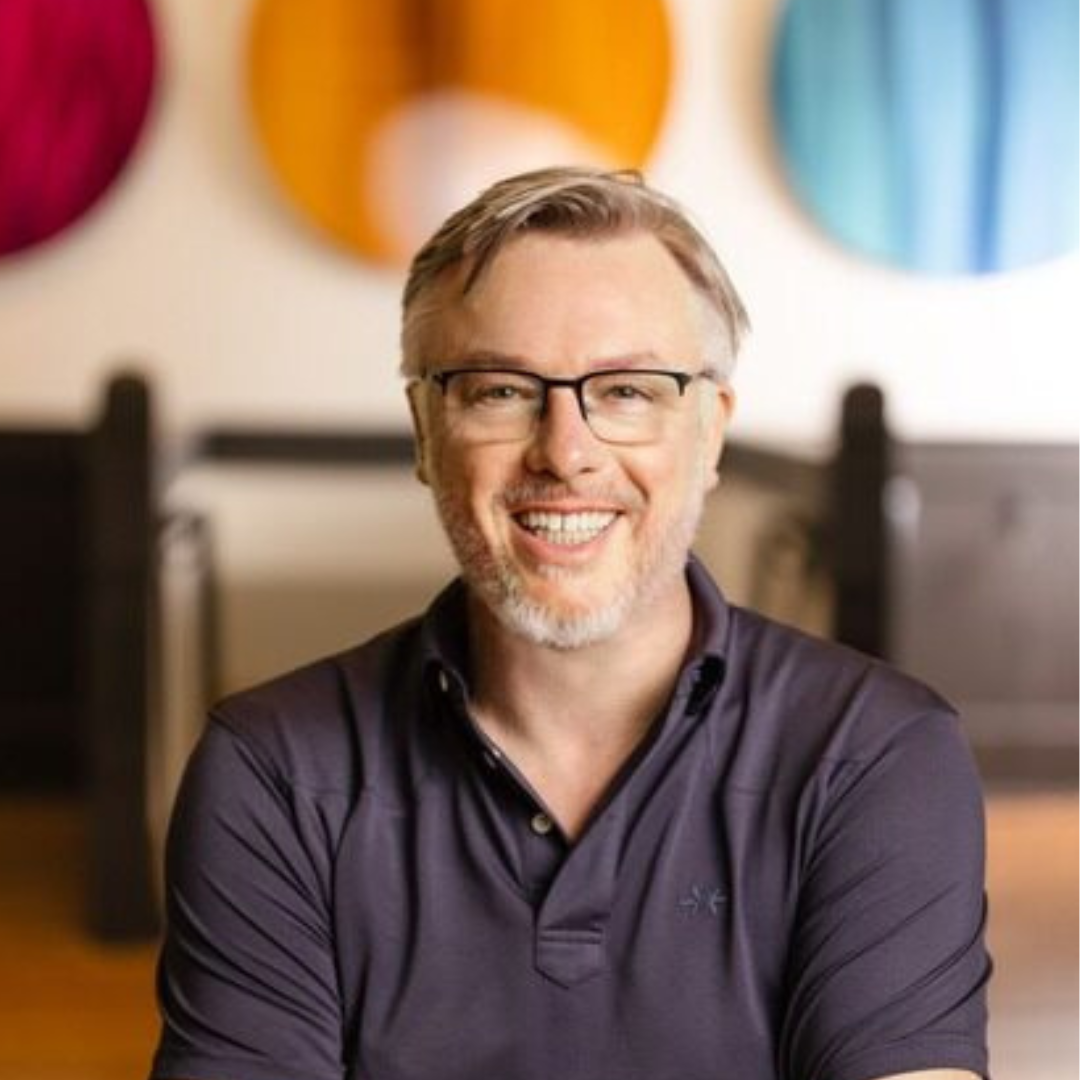
Paul Lynch
CEO, Centage
Paul Lynch is the CEO of Centage and a seasoned B2B SaaS operator with extensive experience building, scaling, and exiting technology businesses. He works closely with CFOs and finance leaders to help elevate finance from a reporting function to a strategic partner — earning a true seat at the strategy table.
Over his career, Paul has led and advised high-growth SaaS and fintech companies, with a proven track record across buying, building, and selling businesses. He previously served as CEO of Assembla, exiting to Idera in 2018, and later oversaw the merger of Chargify and SaaSOptics as part of a Battery Ventures investment. He has also served as CEO and Chairman of Import.io and is a Venture Partner at Scaleworks.
Listen Now on Your Favorite Podcast App


Keep reading...
Interviews, tips, guides, industry best practices, and news.

Cash flow forecasting for mid-market CFOs: the driver architecture that holds up across healthcare, nonprofit, manufacturing, distribution, and professional services